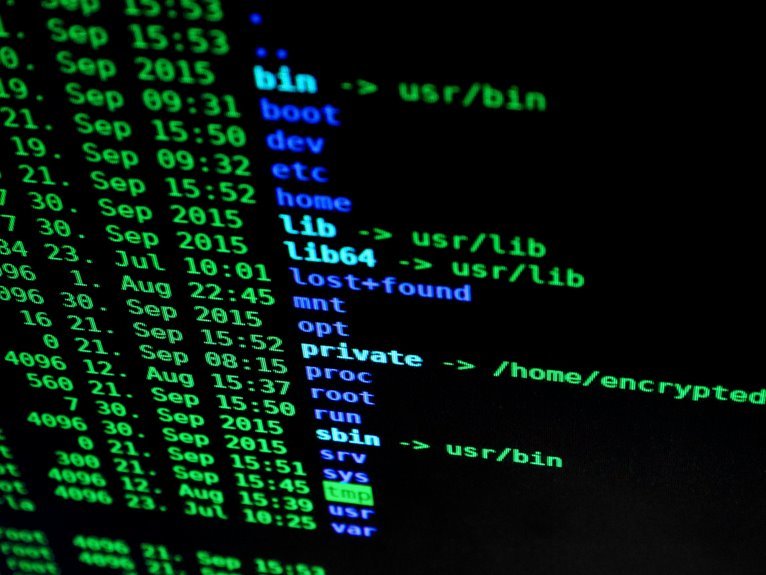
A Digital Network Authentication File (DNAF) aggregates credential data, permissions, and event logs under a consistent identifier scheme. The sequence of numbers anchors identities to governance metadata, enabling traceable authorization and auditable state transitions. This structure supports modular routing and policy enforcement while highlighting the importance of change logs and incident planning. Yet questions remain about data integrity, privacy controls, and long-term resilience, inviting closer scrutiny of workflows and governance to justify continued scrutiny of the framework.
What Is a Digital Network Authentication File (DNAF) and Why It Matters
A Digital Network Authentication File (DNAF) is a structured data artifact that records and verifies the credentials, permissions, and authentication events associated with a network entity.
The DNAF concept clarifies security expectations, enabling disciplined access controls and accountable data governance.
It supports traceability, policy enforcement, and audits, while preserving user autonomy and scalable, consistent security practices across diverse environments.
How Identifier Sequences Fit Into DNAF Workflows
Identifier sequences are the backbone of DNAF workflows, providing deterministic anchors for identity, permissions, and events across heterogeneous systems. The mechanism maps diverse identifiers to unified metadata, enabling traceable authorization and event provenance. In practice, identifier sequences enable modular routing, consistent policy enforcement, and auditable state transitions. Effective sequencing reduces ambiguity, supports scalable governance, and clarifies lineage within dnaf workflows.
Risks of Mismanaging DNAF Data and How to Detect Them
Mismanagement of DNAF data introduces multi-layered risks that can propagate across systems and erode trust in authentication workflows.
The analysis identifies data privacy breaches, unauthorized access, and compromised audit trails as primary threats.
Detection relies on continuous monitoring, anomaly profiling, and rigorous change logs.
Prepared incident response plans enable rapid containment, forensic clarity, and coordinated stakeholder notification to preserve system integrity.
Best Practices to Implement Resilient DNAF-Backed Security Programs
To build resilient DNAF-backed security programs, organizations should structure governance, risk management, and technical controls into an integrated framework that aligns with business objectives and regulatory expectations. The approach emphasizes secure governance and proactive threat modeling, enabling continuous assessment, transparent decision rights, and measurable resilience.
Formalized metrics, independent reviews, and regular tabletop exercises support disciplined execution and adaptive, freedom-supporting security posture.
Frequently Asked Questions
How Often Should DNAF Data Be Rotated for Optimal Security?
Rotations should occur annually as a baseline, with adjustments based on risk; a formal data retention and access governance review can justify shorter cycles in high-sensitivity environments, while longer cycles demand compensating controls and rigorous auditing.
Can DNAF IDS Be Spoofed, and How to Verify Legitimacy?
Yes, dnaf IDs can be spoofed; verification hinges on multi-factor checks and anomaly detection. Security threats arise from credential reuse and tampering, while rigorous verification methods and provenance audits mitigate spoofing risks and confirm legitimacy for freedom-driven systems.
What Is the Typical Latency Impact of DNAF Checks?
Latency varies modestly; typical checks introduce measurable delays, with latency variability influenced by network conditions and verification workload. Cache warm up reduces repeat costs, yielding faster subsequent responses and more stable, predictable latency under steady load.
Are There Industry Standards for DNAF Encryption Protocols?
Dnaf encryption is governed by evolving protocol standards, though no universal mandate exists; organizations typically adopt industry-aligned frameworks, emphasizing interoperability, risk management, and granular cipher suites, while balancing legacy constraints and security posture.
How Does DNAF Integration Affect User Privacy Rights Compliance?
DAF integration presents nuanced privacy compliance considerations, requiring rigorous assessment of data flows, purposes, and retention. It supports data minimization by limiting collected identifiers, enabling governance controls, and aligning with consent frameworks while preserving user autonomy and transparency.
Conclusion
A meticulous audit closes the loop, revealing how each identifier anchors identity, permissions, and events within a living DNAF. Yet the final page remains unseen: subtle anomalies, lagging logs, and evolving threats threatening to unravel the audit trail. The analysis concludes with cautious certainty—only by enforcing rigorous change controls, continuous monitoring, and disciplined incident response can the system preserve trust. In this wary balance, resilience is not a feature but a continuous practice.